 01
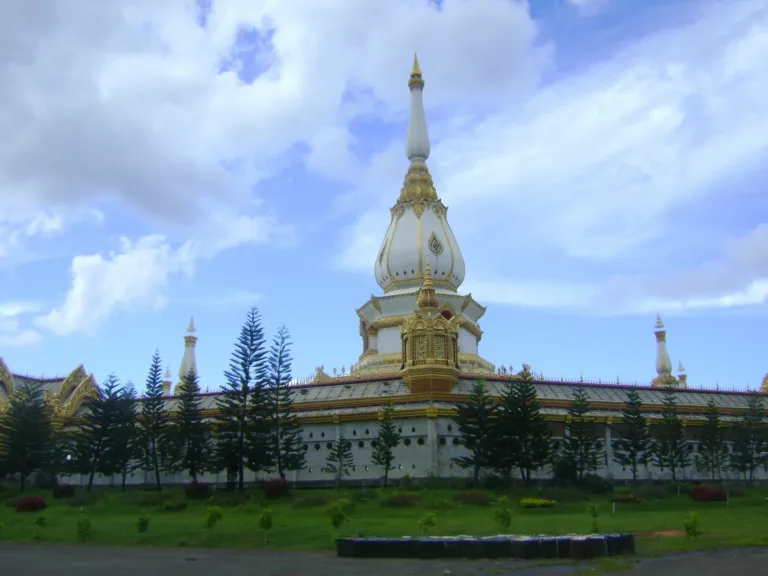
The 101 m chedi101 m wide, long and high; 109 m with the gold spire
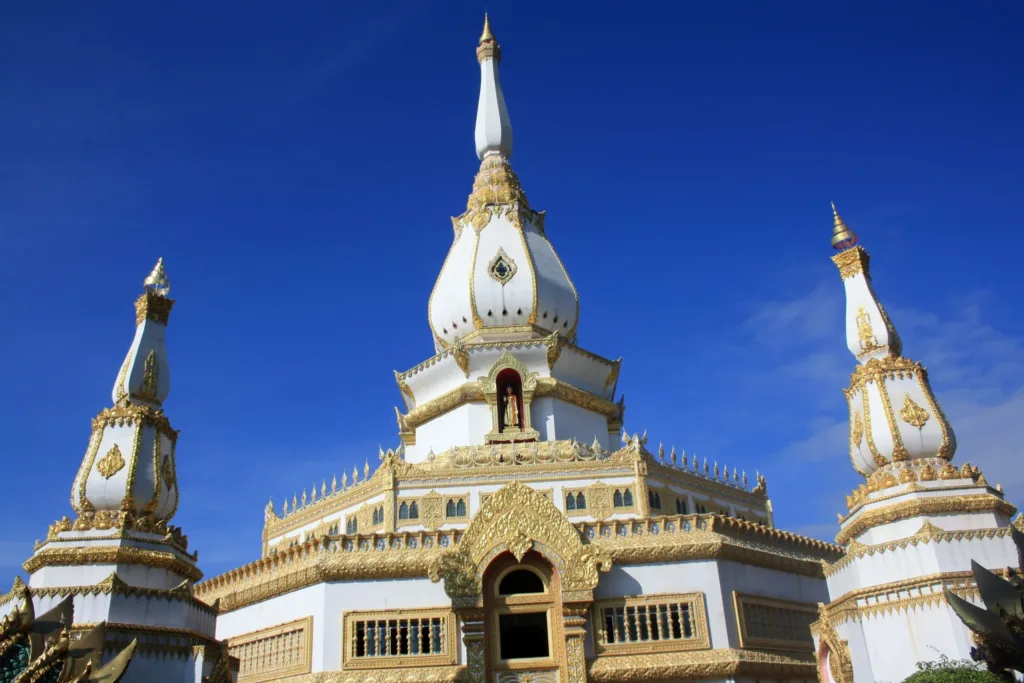
Hilltop great chedi · Nong Phok
A vast chedi 101 m wide, long and high (109 m with its spire) on Phu Khao Khiao in Wat Pha Nam Thip Thep Prasit Wanaram, Nong Phok, Roi Et, with exhibition floors and a viewpoint.
Holiday / event — crowded
Cover shoulders and knees · Remove hats and shoes where required · No food, drinks, incense or candles inside · No smoking
Daily, roughly 06:00–17:00
Before 09:00 for cool air and good light
01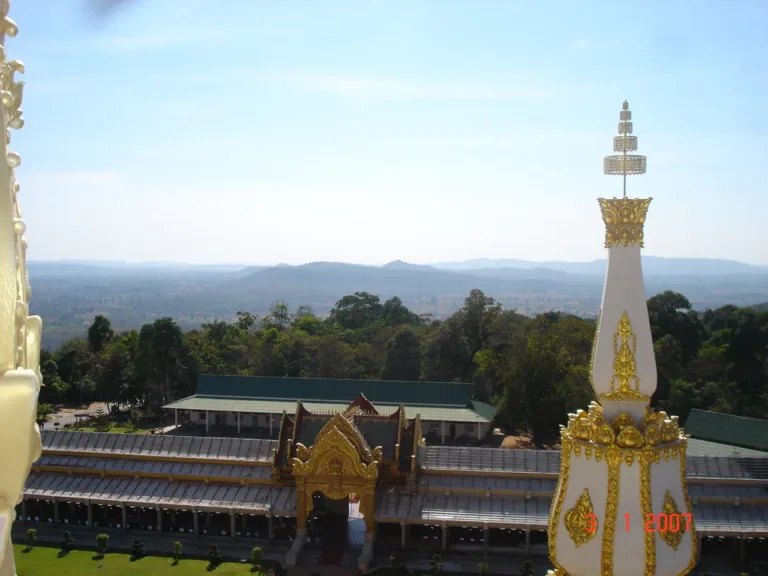 02
Tap a day card to see that day’s weather, rain, haze and hourly forecast
Best time to go Daytime is over · see tomorrow
Holiday — traffic on the way up and parking fills fast; leave early
Green band = hours used for the score
Best time to go Fine all day little rain through the day
Holiday — traffic on the way up and parking fills fast; leave early
Green band = hours used for the score
Best time to go Fine all day little rain through the day
No warnings today — normal road and weather conditions
Green band = hours used for the score
Best time to go Fine all day little rain through the day
No warnings today — normal road and weather conditions
Green band = hours used for the score
Best time to go Fine all day little rain through the day
No warnings today — normal road and weather conditions
Green band = hours used for the score
Best time to go Fine all day little rain through the day
No warnings today — normal road and weather conditions
Green band = hours used for the score
Best time to go Fine all day little rain through the day
No warnings today — normal road and weather conditions
Green band = hours used for the score
Phra Maha Chedi Chai Mongkhon stands on Phu Khao Khiao in the Phu Phan range, inside Wat Pha Nam Thip Thep Prasit Wanaram, Pha Nam Yoi, Nong Phok District, Roi Et. It was built under Luang Pu Si Mahaviro, a disciple in the Ajahn Mun lineage, and measures 101 m wide, long and high on a 101-rai site, about 109 m to the tip of its gold spire.Inside are several floors: a great hall, a monks' assembly hall with Buddha-life murals, an ordination hall with likenesses of 101 revered monks, a museum of Luang Pu Si's belongings, and at the top a relic chamber reached by a 119-step spiral stair, with wide views over rice fields and the Phu Phan hills.It's open daily, roughly 06:00–17:00, with no entry fee. Come early, dress modestly and remove shoes before the marble floors.
Arrive Before 09:00 for cool air and good light
Drive slowly, especially in the rains
No food, drinks, incense, candles or smoking inside the chedi
The top floor is on foot only
Free · Time needed 2–3 hours
Holidays and Buddhist holy days
Phra Maha Chedi Chai Mongkhon is a modern great chedi on Phu Khao Khiao in the Phu Phan range, inside Wat Pha Nam Thip Thep Prasit Wanaram, known locally as Wat Pha Nam Yoi, in Nong Phok District, Roi Et. It was built under the lead of Luang Pu Si Mahaviro (Phra Thep Wisutthimongkhon), a meditation monk in the lineage of Ajahn Mun Bhuridatta, to enshrine relics of the Buddha and the remains of revered Isan masters. Work began with the laying of the foundation stone in 1988 and carried on for decades on donations from Buddhists across the country, making it one of the landmarks of the Northeast today.
The name "Pha Nam Yoi" describes the landscape: a steep cliff where water seeps and drips down the rock all year. In the Isan dialect "nam yoi" means water falling in drops or trickles. Village elders say the area was once rich forest full of wildlife with a waterfall that never ran dry, and that people who fell ill would climb up to drink the cliff water, believing it would heal them. This belief is a local tradition handed down by word of mouth.
Luang Pu Si was born on 3 May 1917 at Ban Kham Pom in Wapi Pathum, Maha Sarakham. He worked as a teacher for several years before ordaining in 1945 at Wat Rat Rang San in Roi Et, receiving the monastic name "Mahaviro". He then wandered as a forest monk through the Northeast and practised under Luang Pu Mun at Ban Nong Phue in Sakon Nakhon in 1948–1949, before settling at Wat Pa Kung (Wat Prachakhom Wanaram) in Si Somdet from 1953.
Around 1950–1957 Luang Pu Si came up Phu Khao Khiao with his disciples to meditate, when it was still dense forest. Later the forest was hit by logging and clearing for farms, and the hills also saw communist insurgent activity. In 1974 the deputy governor of Roi Et invited Luang Pu to found a permanent monastery here. He sent five monks, including Luang Pu Bunsi Nyanadhammo, to spend the rains retreat that year, and accounts credit the monks' strict ascetic practice with gradually easing tensions in the area.
Between 1974 and 1984 the monastery restored the summit, planting some 300,000 trees, digging two large reservoirs and building a great hall, a dining hall for around a thousand monks, guest buildings and a kitchen. The main Buddha image in the great hall measures 101 inches across the lap, and the number 101, which echoes the name Roi Et ("one hundred and one"), became a theme that runs through the later building work.
The great chedi itself was born at the joint kathin ceremony at Wat Pa Kung on 25 November 1985, when Luang Pu Si told the gathered monks that he had received relics of the Buddha as a special gift and proposed building a permanent monument for them and for the remains of the Isan masters. A later meeting of Dhammayut monastic leaders of regions 8–11 asked him to lead the project and chose Pha Nam Yoi on Phu Khao Khiao as the site.
On 19 December 1987 the building committee, chaired by Somdet Phra Nyanasamvara on the monastic side and General Chavalit Yongchaiyudh on the lay side, named it "Phra Maha Chedi Chai Mongkhon" and asked the Fine Arts Department to design it. Dr Phuthep Sitthithavorn proposed leaving the interior hollow so it could be used. The first funds came from a 200,000-baht donation, and Dhammayut temples across the Northeast held a forest-robe offering of 84,000 lots of 1,000 baht each, raising 84 million baht.
The foundation stone and main pillar were laid on 30 January 1988. The chedi is an eight-sided inverted-bell form blending the Central Thai style of Phra Pathom Chedi with the Isan style of Phra That Phanom. Its base is 101 metres on each side and its body 101 metres tall, a nod to Roi Et; the height was later raised to 109 metres in honour of King Rama IX. Eight satellite chedis, each 29 metres tall, surround it.
A gold parasol finial weighing 4,750 baht, about 60 kg, crowns the top. An academic study dates its raising to 20 July 1996, while a district document places it after the structure was finished around 2003. On 1 May 1997 relics of the Buddha from Sri Lanka were enshrined in the sixth-floor chamber. There are three relics: one Luang Pu received as a special gift and two given by the Supreme Patriarch of Sri Lanka, although some sources say the relics came from India.
From 1997 to 2003 a 3,500-metre wall was built around the grounds under Phra Khru Palat Thong-in, and on 11 July 2004 the temple received a Borobudur-style chedi of volcanic stone presented to Luang Pu by senior monks from Indonesia. That year the press reported more than a billion baht already spent, and later figures put the total at over 3,000 million baht. The temple was formally established on 17 June 2005 and granted royal consecrated boundaries on 31 March 2006, with Phra Ajahn Thong-in Katapunyo as its first abbot.
In his final years Luang Pu Si fell ill with old age and was treated at Srinagarind Hospital, Khon Kaen University; by 2007 the chedi was reported more than 80 percent complete. After his passing, his royally sponsored cremation was held at Wat Pa Kung on 13–15 January 2012. Today Phra Maha Chedi Chai Mongkhon is at once a meditation centre, a museum of Luang Pu's life and one of Roi Et's main attractions, set within a no-hunting area that still protects the forest on the hilltop.
Arrived? Check in, collect a stamp and tell others what it is like right now
Check your location first, so you do not fill in the form for nothing
Location must be on and within 1 km · One check-in per place per day · come back on other days to check in again
Post photos from anywhere — no need to be here · Up to 20 photos at a time · JPG / PNG / WebP · GPS location data is removed automatically
The chedi is on Phu Khao Khiao, Pha Nam Yoi, Nong Phok: about 62 km from Roi Et town to Nong Phok, then about 5 km up the hill.
Roi Et–Phon Thong–Nong Phok on Highways 2044 and 2136, then up Phu Khao Khiao · Fuel
From the lower car park up to the chedi · Ask on site
Highways 2044 and 2136, then a steep ~5 km climb up Phu Khao Khiao
Lower car park with shops, food, toilets and a tram up to the chedi
Daily, roughly 06:00–17:00
about 67 km from Roi Et town
Phra Maha Chedi Chai Mongkhon
Answers travellers want before they go — a one-minute read
101 m, about 109 m with the spire, on a 101 × 101 m base
No; donations are optional
Daily, roughly 06:00–17:00
About 67 km, roughly 1–1.5 hours by car
Luang Pu Si Mahaviro, of the Ajahn Mun lineage
A tram runs from the lower car park, or you can walk
Best day this week: Monday 30 Nov · Check in when you arrive to collect a stamp
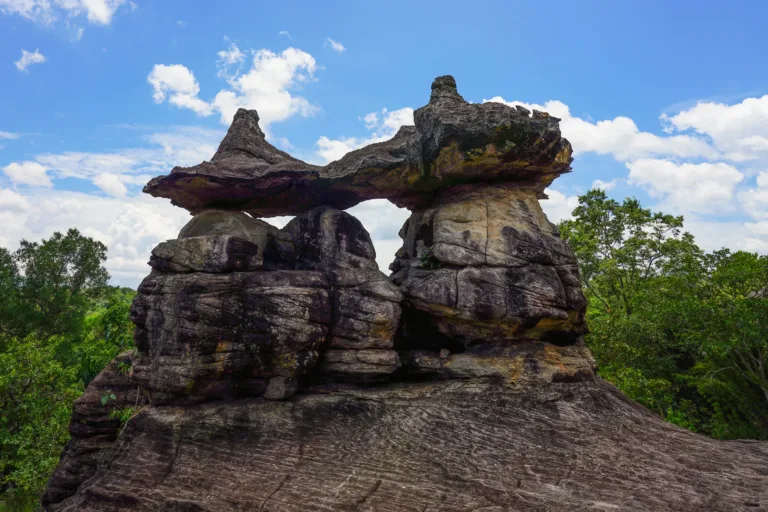 Phu Pha Thoep National Park
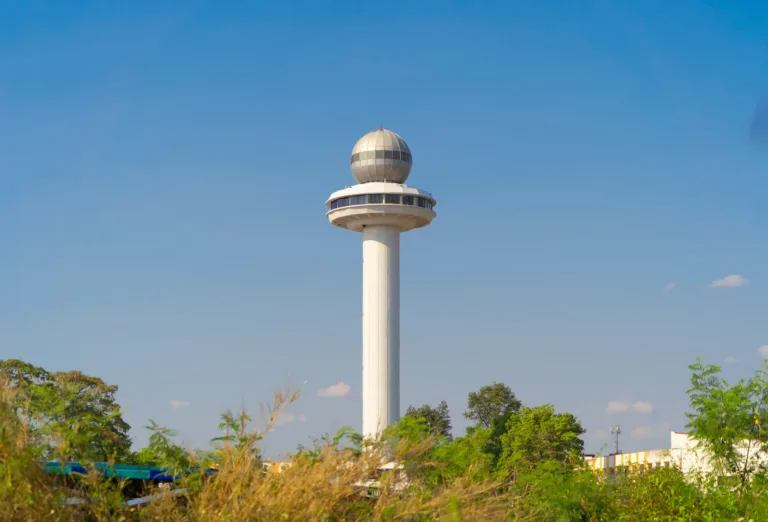 Ho Kaeo Mukdahan
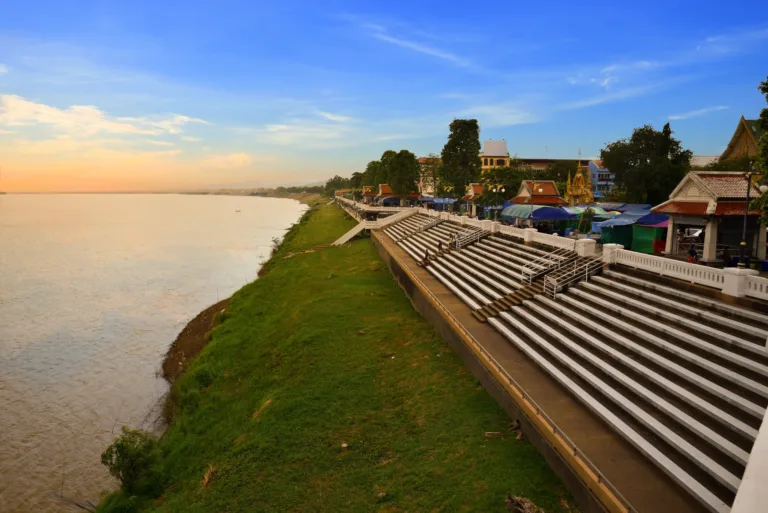 Indochina Market, Mukdahan