Opening hours, time needed and photo spots
Open-air ruins, daylight · Chipatha Museum about 09:00–16:00
1–2 hours
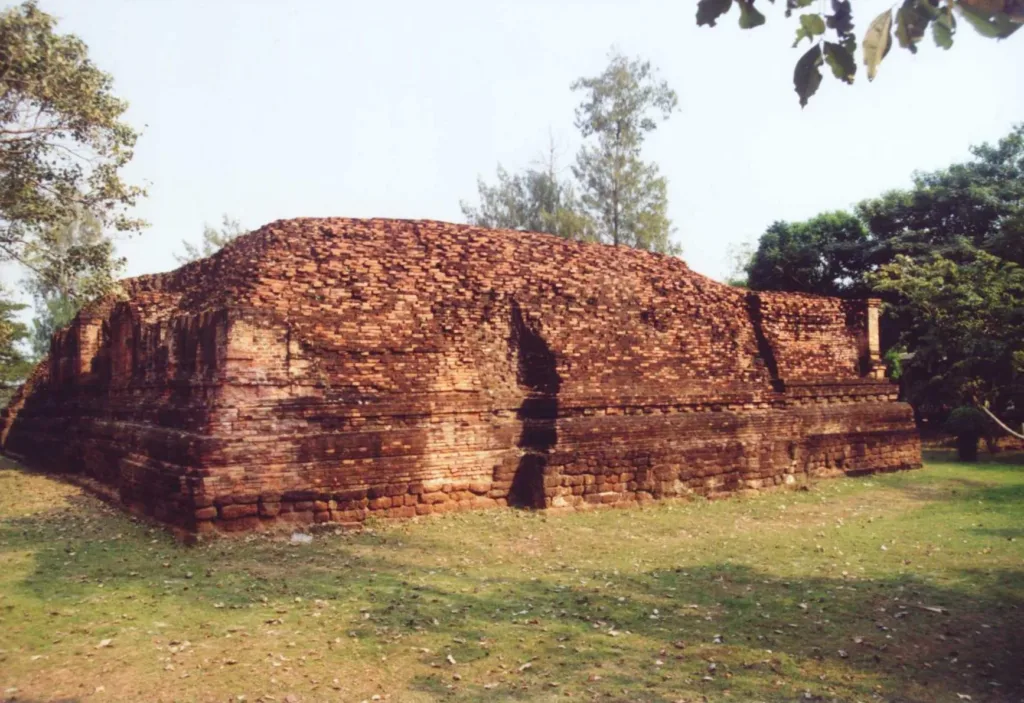
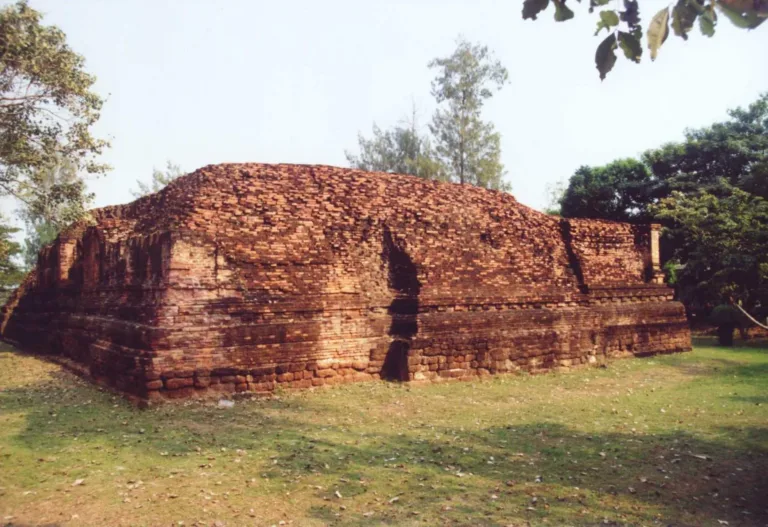
Monument 18 — Laterite platform and the giant Buddha
Free
7 days ahead
When to go
this week
Tap a day card to see that day’s weather, rain, haze and hourly forecast
Best time to go Best window 06:00–16:00 Little rain
No warnings today — normal road and weather conditions
Hour by hour
Green band = hours used for the score
Best time to go Fine all day little rain through the day · light drizzle possible at times
No warnings today — normal road and weather conditions
Hour by hour
Green band = hours used for the score
Best time to go Best window 06:00–15:00 Little rain · light drizzle possible at times
Thick morning fog with visibility under 1 km — use headlights and drive slowly
Hour by hour
Green band = hours used for the score
Best time to go Fine all day little rain through the day · light drizzle possible at times
No warnings today — normal road and weather conditions
Hour by hour
Green band = hours used for the score
Best time to go Best window 06:00–14:00 Little rain · light drizzle possible at times
No warnings today — normal road and weather conditions
Hour by hour
Green band = hours used for the score
Best time to go Fine all day little rain through the day · light drizzle possible at times
No warnings today — normal road and weather conditions
Hour by hour
Green band = hours used for the score
Best time to go Fine all day little rain through the day
No warnings today — normal road and weather conditions
Hour by hour
Green band = hours used for the score
Khu Bua Ancient City
Khu Bua Ancient City, Khu Bua, Mueang Ratchaburi, Ratchaburi.
- Still cool
- Hot, little shade
- Temple plaza lit
Arrive 16:00
- Monument 18Laterite platform and the giant BuddhaMorning
- Khu Bua-pattern plazaFrom aboveEvening
- Textile roomOld chok patternsDaytime
Gallery
Photos from Wikimedia Commons and contributors · full credits inClassic page
Good to know here
Deep pond around the base
Slippery after rain
- Start at Wat Khlong Suwan Khiri
- Little shade — bring a hat and water
- Do not climb the monuments or take bricks or sherds
- See the Khu Bua finds at the Ratchaburi National Museum
Adults 0 THB · Time needed 1–2 hours
Holidays
- Kids Good; educational
- Seniors Good around Wat Khlong; flat
- Wheelchair Temple grounds partly; outlying mounds no
- Pets Temple grounds; use discretion
- Ban Tathai restaurantNear Khu Bua
- Restaurants in Ratchaburi townAbout 12 km
- Dress politely in the temple
- Ask before entering monuments on private land
- Do not climb the monuments
- Do not take bricks or sherds — it is illegal
- Open ground with little shade
- Some monuments are on private land; Monument 28 is ringed by a deep pond
- Ramparts are slippery after rain
Best months
Tap a month on the wheel to see weather, rain, haze and crowds from 10 years of records
Best time · Nov–Feb for cool, dry weather · morning or after 16:00; the Wat Khlong plaza is lit at dusk
Watch out · Mar–May is very hot on the open site · ramparts are slippery after rain
21°Jan
22°Feb
24°Mar
26°Apr
26°May
25°Jun
25°Jul
25°Aug
25°Sep
24°Oct
23°Nov
22°Dec
Oct by the records 24–31°C · avg rain 268 mm (24 rainy days) · clear 1 days · avg PM2.5 17
The story of this place
Khu Bua lies at Khu Bua, Mueang Ratchaburi, about 12 km south of town. It is a rectangular city of about 800 × 2,000 m inside a moat about 50 m wide and earthen ramparts, some 160 ha in all — the second largest in the region after Nakhon Pathom. It is managed by the Fine Arts Department's Ratchaburi office.
Read more 4 more paragraphs
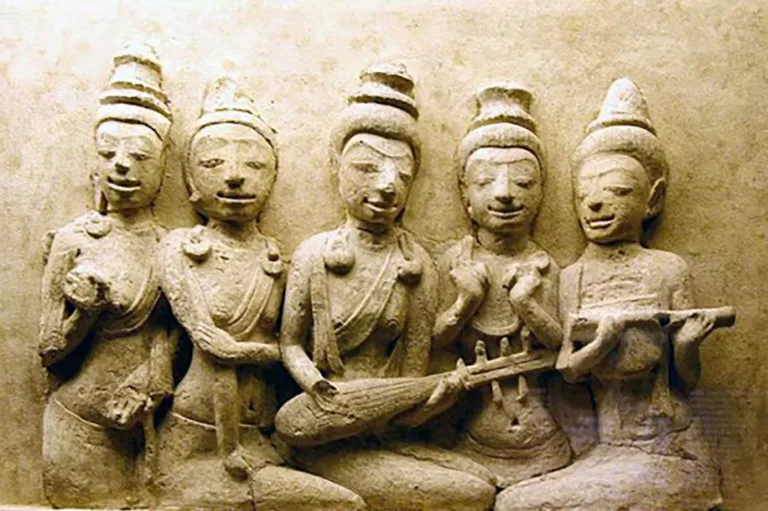
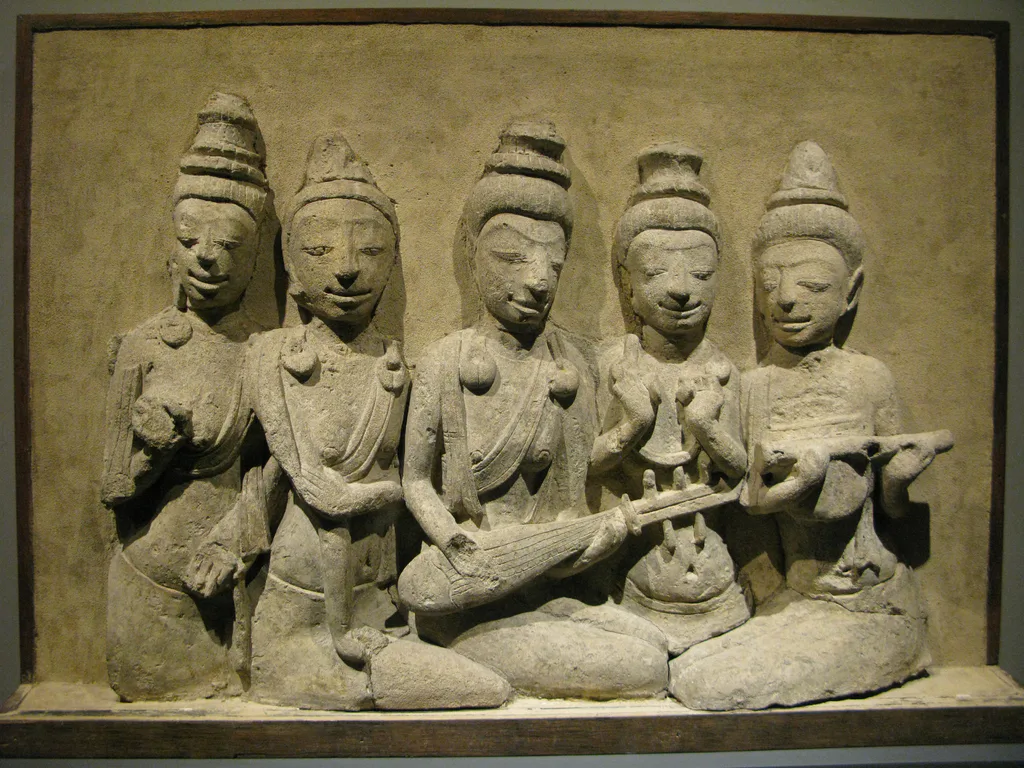
Khu Bua flourished in the Dvaravati period, roughly the 6th–11th centuries, as a trading city of the Mae Klong basin linked to the Burmese coast. Finds include stucco and terracotta Buddhas and bodhisattvas, dwarf figures, Dharmachakra fragments, gold and silver reliquaries, beads and a figure of a "foreigner in a conical hat", possibly a Sogdian or Persian merchant. The stucco female musicians from Monument 10 are now in the Bangkok National Museum.
In 1951 local monks noticed the ruins; around 1957 looting began, and a monk of Wat Sattanat Pariwat asked the Fine Arts Department to inspect. From 1961 to 1963 Somsak Rattanakun surveyed the site, numbering 44 mounds and excavating 23, and the monuments were registered in the Royal Gazette on 30 October 1962. Silpakorn University excavated further in 1981–1983. The much-publicised "Khu Bua inscribed tiles", however, were declared forgeries by the Office of the Prime Minister on 9 October 1966.
In 1995–1998 the department restored Monuments 8, 18 and 44 and surveyed more sites, bringing the total to 59. Monument 18 at Wat Khlong Suwan Khiri, a large laterite-and-brick platform with lotus mouldings, is the biggest and has been compared with Khao Khlang Nai at Si Thep. A 2023 report, however, found 34 of the 59 monuments destroyed by encroachment, leaving 25.
In 1804 King Rama I sent Krom Luang Thep Hariruk to take Chiang Saen; about 23,000 people were brought south in five groups, one of which was settled in Saraburi and Ratchaburi. These Thai Yuan made their home at Khu Bua, and the community became known for black-and-red pha sin tin chok textiles. Teacher Udom Somphon, the temple and villagers set up the Chipatha Museum Ban Khu Bua at Wat Khlong Suwan Khiri, showing antiquities, Thai Yuan life and chok cloth over 100 years old. A 2023 dig at Khok Phithak recovered glass beads that a 2026 study found were mostly South Asian in type, underlining Khu Bua's place in ancient trade networks.
- 6th–11th c.Khu Bua flourishes in the Dvaravati period
- 1804Thai Yuan from Chiang Saen resettled in Ratchaburi (Khu Bua)
- 1951Monks notice the ruins
- 1957Looting begins; Fine Arts Department inspects
- 1961–196344 mounds numbered, 23 excavated
- 30 Oct 1962Registered as monuments
- 9 Oct 1966Khu Bua inscribed tiles declared forgeries
See 4 events
- 1981–1983Silpakorn University excavations
- 1995–1998Monuments 8, 18 and 44 restored; 59 sites recorded
- 202334 monuments reported destroyed; beads dug at Khok Phithak
- 2026Khu Bua bead study published
Check-ins & visitor photos
Arrived? Check in, collect a stamp and tell others what it is like right now
Check your location first, so you do not fill in the form for nothing
Location must be on and within 1.5 km · One check-in per place per day · come back on other days to check in again
Post photos from anywhere — no need to be here · Up to 20 photos at a time · JPG / PNG / WebP · GPS location data is removed automatically
How to get there
Paved; ordinary cars are fine
About 12 km south of Ratchaburi town · Fuel
Ban Khu Bua station (Southern Line), then local transport · Metered
Local paved roads south of Ratchaburi town; navigate to "Wat Khlong Suwan Khiri"
In Wat Khlong Suwan Khiri
Ratchaburi town
Good
Open-air ruins, daylight · Chipatha Museum about 09:00–16:00
around 12 km fromRatchaburi town
Khu Bua Ancient City
0 THB
Stays near Khu Bua Ancient City
Approx. nightly price for 2 adults (next week) · final price depends on your dates
FAQ
Before you goKhu Bua Ancient City
Answers travellers want before they go — a one-minute read
How old is Khu Bua?
A Dvaravati city of the 6th–10th/11th centuries CE, about 1,300 years ago
What is the main monument?
Monument 18 at Wat Khlong Suwan Khiri, the largest laterite-and-brick platform at Khu Bua
Is there an entry fee?
No — the ruins and the Chipatha Museum are free; donations welcome
Where are the famous finds?
Mostly at the Ratchaburi National Museum; the female-musicians relief is at the Bangkok National Museum
Who are the Thai Yuan of Khu Bua?
Descendants of people from Chiang Saen resettled in the early Rattanakosin period, known for pha sin tin chok weaving
Can I go by train?
Yes — Ban Khu Bua station on the Southern Line
Ready to go to Khu Bua Ancient City?
Best day this week: Wednesday 28 Oct · Check in when you arrive to collect a stamp