 01
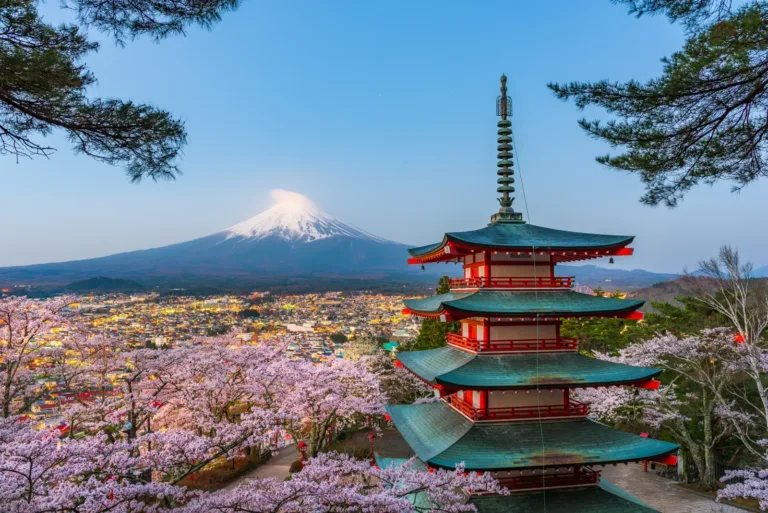
Chureito PagodaFive-storied pagoda built in 1963 as a war memorial
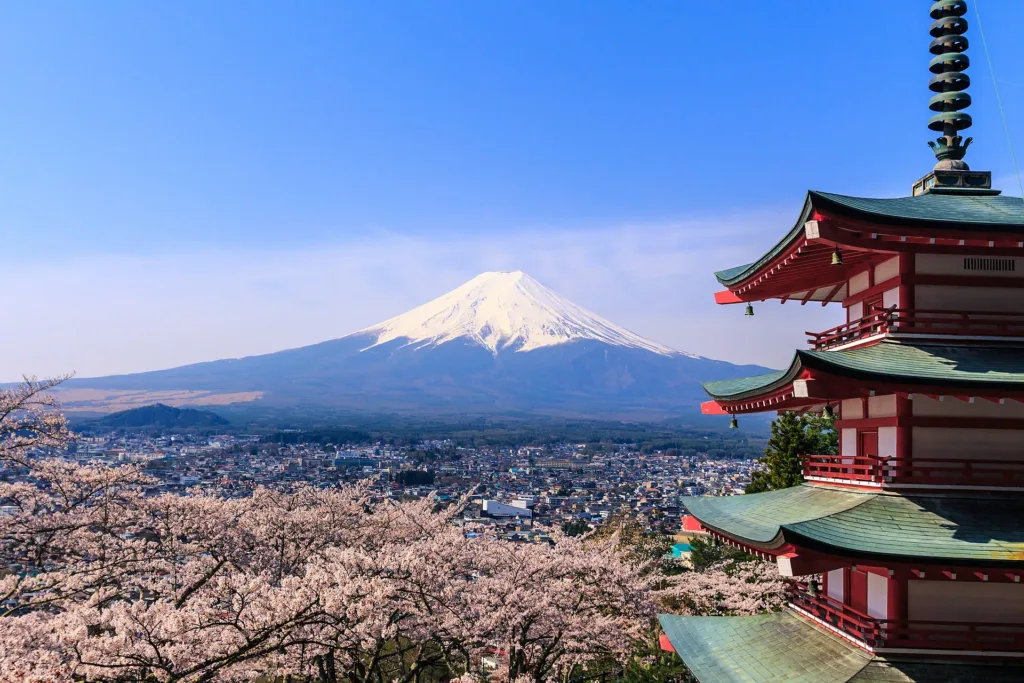
A five-storied pagoda with Mt. Fuji
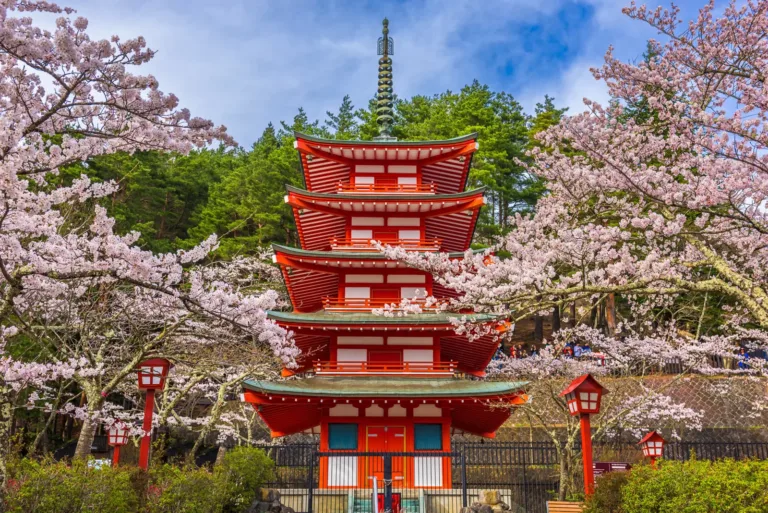
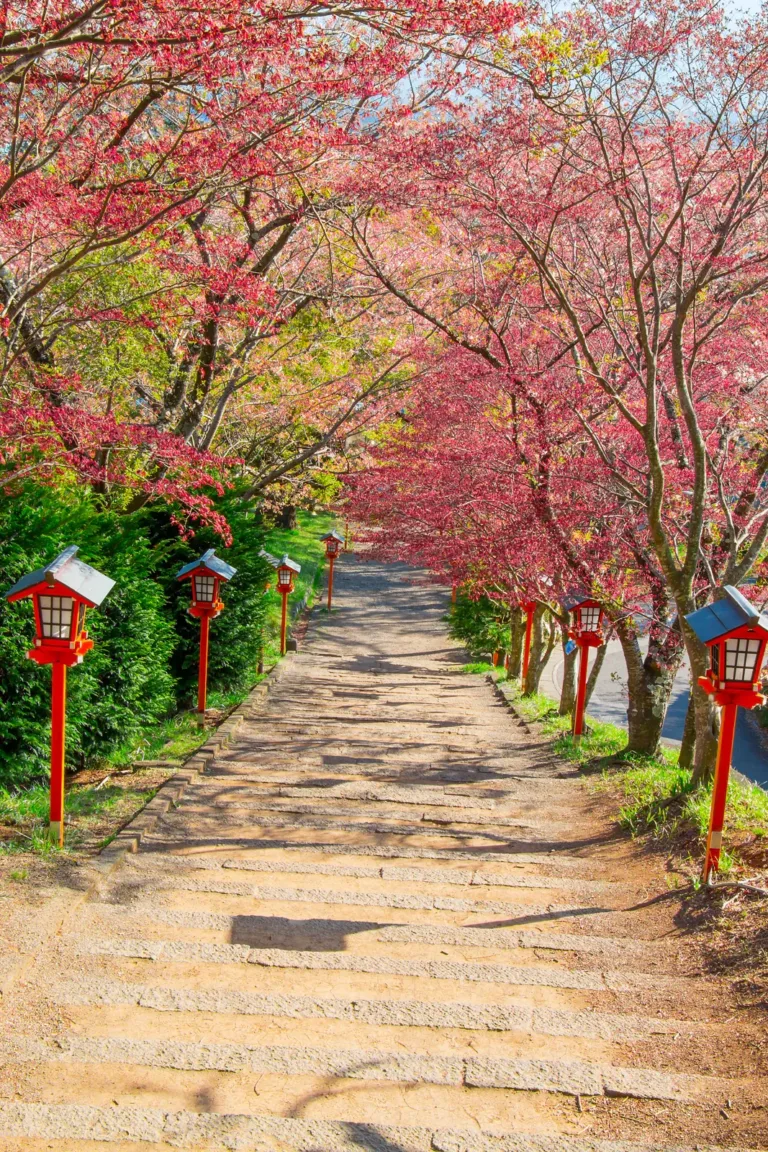
Chureito Pagoda at Arakurayama Sengen Park, Fujiyoshida: the famous five-storied pagoda framed with Mt. Fuji. Climb 398 steps, free and open all day. Cherry blossoms early Apr, leaves early Nov, clearest skies in winter.
Holiday / event — crowded · All-day rain, mountain road wet and slippery
07:00
Steep stone stairs of 398 steps, with a slope as an alternative
Good
01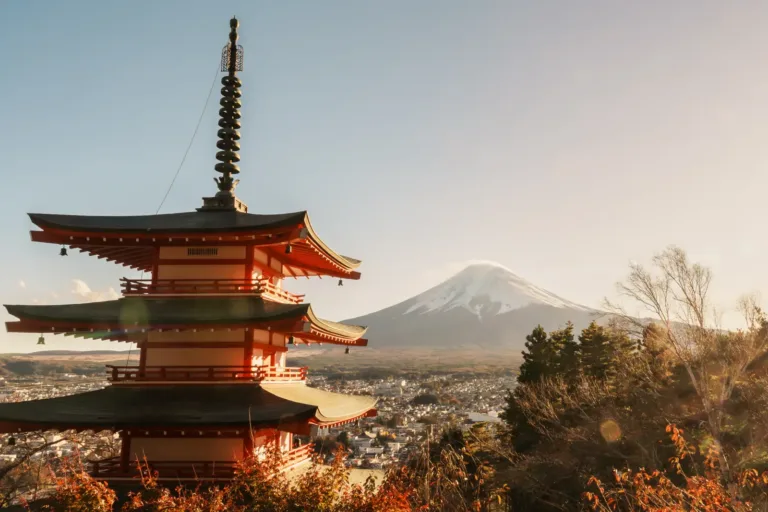 02
 03
 04
Tap a day card to see that day’s weather, rain, haze and hourly forecast
Best time to go Daytime is over · see tomorrow
Showers possible — the mountain road may be slippery; take bends carefully
Holiday — traffic on the way up and parking fills fast; leave early
Green band = hours used for the score
Best time to go Fine all day little rain through the day
Strong gusts, about 53 km/h
Holiday — traffic on the way up and parking fills fast; leave early
Green band = hours used for the score
Best time to go Fine all day little rain through the day
No warnings today — normal road and weather conditions
Green band = hours used for the score
Best time to go Fine all day little rain through the day
No warnings today — normal road and weather conditions
Green band = hours used for the score
Best time to go Fine all day little rain through the day
No warnings today — normal road and weather conditions
Green band = hours used for the score
Best time to go Fine all day little rain through the day
No warnings today — normal road and weather conditions
Green band = hours used for the score
Best time to go Fine all day little rain through the day
No warnings today — normal road and weather conditions
Green band = hours used for the score
Scored from cloud cover at every level and tonight’s moonlight — the darker the sky, the clearer the Milky Way · tap another night below for the next 7 nights
Chureito Pagoda, Arakurayama Sengen Park, 2-chome-3353 Asama, Fujiyoshida, Yamanashi
Arrive 07:00
Steep, slippery in rain or ice
Do not enter private property for photos
Free · Time needed 1–2 hours
Early to mid Apr (cherry blossoms) · early Nov (autumn colors) · weekend late mornings
Apr: Arakurayama cherry blossom festival (park car park closed during the festival)
Tap a month on the wheel to see weather, rain, haze and crowds from 10 years of records
Best time · Dec–Feb clearest skies and sharpest Fuji · early to mid Apr cherry blossoms · first half of Nov autumn colors · come at dawn, fewer clouds than afternoon
Watch out · Jun–Aug clouds often hide Fuji, rainy season · cherry blossom season is very crowded, park car park closed
Nov by the records 4–14°C · avg rain 105 mm (10 rainy days) · clear 13 days · avg PM2.5 6
Chureito is a vermilion five-storied pagoda on the slope of Mt. Arakura, a hill of about 850 metres behind Fujiyoshida in Yamanashi Prefecture. Officially the Fujiyoshida City War Dead Memorial Tower, it was built around 1959–1962 for local people who died in wars from the Meiji era onward. It is barely sixty years old, yet the view of the pagoda, cherry blossoms and Mt. Fuji in one frame has become one of the best-known images of Japan, and Thai travellers were among the first to make it famous abroad.
Long before the pagoda, this hillside was sacred ground. Arakura Fuji Sengen Shrine at the foot of the stairs was founded around 705, according to the shrine's own history, as the guardian shrine of the communities on Fuji's northern side. It honours Konohanasakuya-hime, goddess of Mt. Fuji, who gives her name to the 398-step Sakuya-hime stairs that now climb to the pagoda.
Shrine legend tells that after a great eruption of Mt. Fuji in 807, the imperial court sent an envoy to perform rites for peace in the land and for the mountain's fire to die down. The court is said to have granted the title "Sangoku Daiichisan", the foremost mountain of the three lands, along with imperial calligraphy and a sacred mask. The phrase still appears in the shrine's full name.
Local history also records that during the Warring States period, Takeda Nobutora, father of the warlord Takeda Shingen, camped at the shrine during his campaign against the Hojo clan. He prayed for victory, and after winning he dedicated a sword to the shrine in thanks.
After the Second World War, towns across Japan raised memorials to those who went to war and never came home. In Fujiyoshida, people who had lost family and friends pushed to build a memorial tower on Mt. Arakura at a time when materials, technology and money were all scarce. Arakurayama Sengen Park opened in October 1959, and work on the pagoda began the same year.
Many Japanese sources say the pagoda was completed in 1962, while many travel guides give 1963. Its design follows the five-storied pagoda of Shitennoji Temple in Osaka, and it stands about 19.5 metres tall (one source says 26 metres). It honours the dead of the First Sino-Japanese War, the Russo-Japanese War, the First World War and the Pacific War. "Chureito" means a tower for loyal spirits. Although it looks like a Buddhist temple pagoda, it is a memorial, not a stupa holding relics.
For decades it was a Fuji viewpoint known mainly to locals. The park covers about 4.3 hectares, with around 650 Someiyoshino cherry trees (some sources say just over 500), planted long ago; the trees around the pagoda were about 50 years old when they were surveyed in 2018. Besides the blossoms in early April, there are autumn leaves in early November and irises along the trail in early June.
The turning point came around 2011, when Yamanashi Prefecture introduced the park to a Thai tour company. Thai visitors loved finding a Kyoto-like scene and Mt. Fuji in one place, and some sources say the view even appeared in Thai school textbooks. Photos from blogs and social media then spread worldwide, and the view made the cover of the fourth revised edition of the Michelin Green Guide Japan, until many Japanese came to know the spot through foreigners' photos.
In 2015 about 50,000 people were reported to visit during roughly two weeks of full bloom, and the city planned fences, warning signs and a wooden deck on the slope behind the pagoda to prevent accidents. The following year, 2016, saw the first Arakurayama Sengen Park Cherry Blossom Festival, with pointing cards in English, Thai and Chinese handed out to local shops.
A 2018 survey found that about 90 percent of the park's Someiyoshino trees were in decline, so the city drew up a restoration plan guided by a tree doctor, with pruning, soil work and zone-by-zone replanting. In 2019 it raised funds through the furusato nozei hometown tax donation system and passed its target. During COVID-19 in 2020 the festival was cancelled and the park closed for a time, and the observation deck behind the pagoda reopened after renovation on 1 February 2022.
In recent years visitor numbers reached about 1.59 million in 2025, roughly five times the 2016 figure, bringing traffic jams, litter and trespassing in the homes around the park. The city began charging for its parking lots in April 2025 and decided not to hold the 2026 cherry blossom festival after about ten years, while keeping staff on hand for traffic and safety. Visitors are asked to come by public transport and to respect the neighbourhood.
Arrived? Check in, collect a stamp and tell others what it is like right now
Check your location first, so you do not fill in the form for nothing
Location must be on and within 3 km · One check-in per place per day · come back on other days to check in again
Post photos from anywhere — no need to be here · Up to 20 photos at a time · JPG / PNG / WebP · GPS location data is removed automatically
Steep stone stairs of 398 steps, with a slope as an alternative
JR Chuo Line to Otsuki, Fujikyu Line to Shimoyoshida, 10 min walk · Train fare
Shinjuku → Fujiyoshida, then Fujikyu Line or taxi · Bus fare
Fujikyu Line to Shimoyoshida · Train fare
Take the Fujikyu Line to Shimoyoshida Station, walk about 10 minutes to Arakura Fuji Sengen Shrine, then climb 398 steps or the slope for 15–20 minutes to the viewpoint.
Free park car park; fills early on weekend mornings and closes during the cherry blossom festival
Fujiyoshida town
Good
Open all day
about 100 km from Shinjuku, Tokyo
Chureito Pagoda
Approx. nightly price for 2 adults (next week) · final price depends on your dates
Answers travellers want before they go — a one-minute read
No, it is free and open all day
398 steps, about 15–20 minutes, with a slope as an alternative
Winter Dec–Feb and early mornings; summer is often cloudy
Train or bus from Shinjuku to Fujiyoshida, Shimoyoshida Station, about 2 hours
Usually early to mid April
Best day this week: Monday 30 Nov · Check in when you arrive to collect a stamp