 01
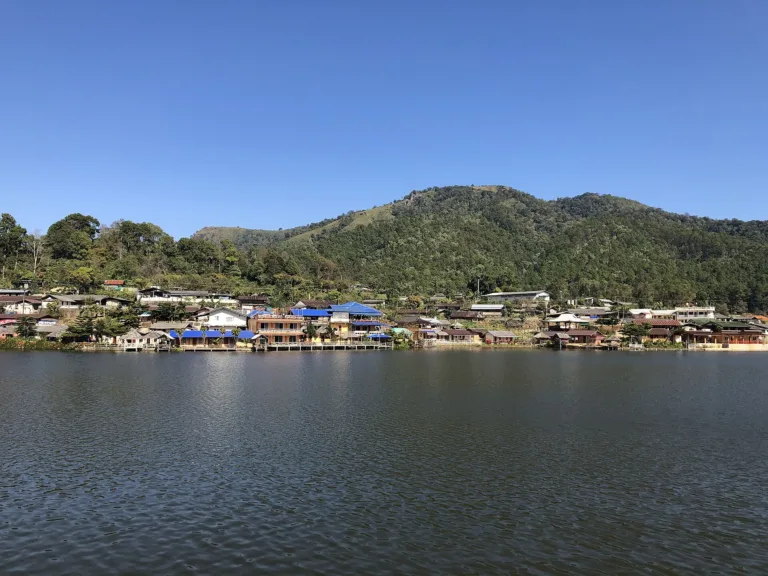
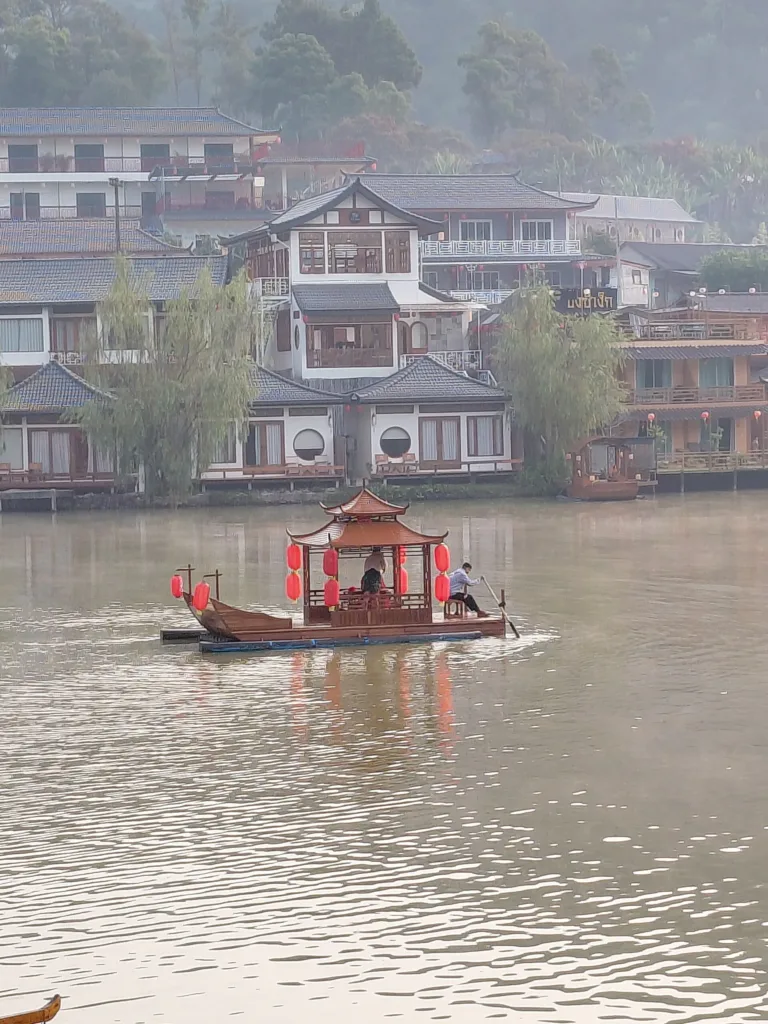
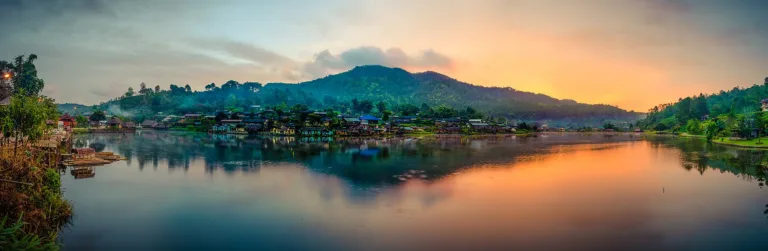
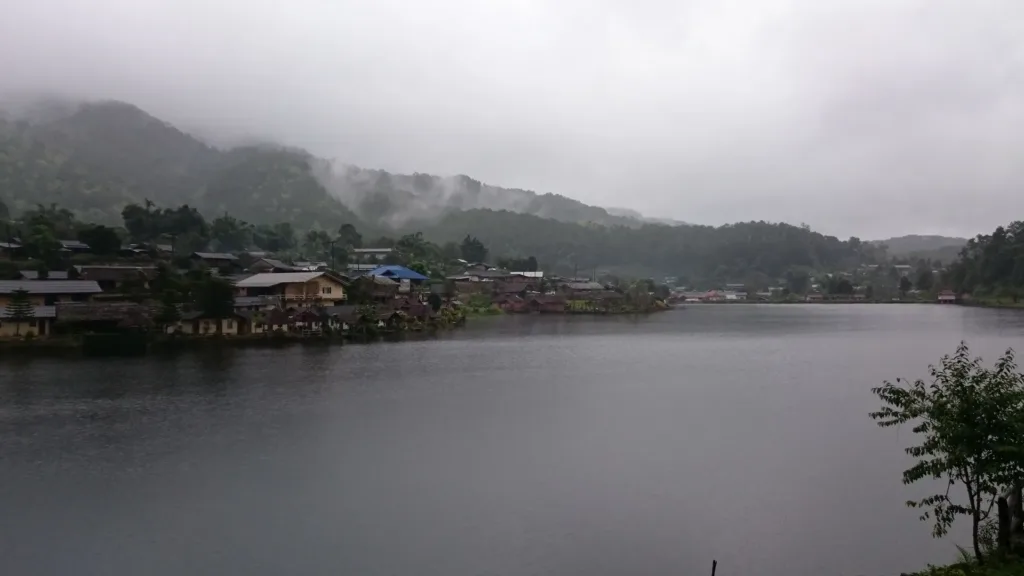
Dam in the mistThe reservoir at the village's heart, misty most of the year
MAE HONG SON · BAN RAK THAI
A Yunnanese Chinese village founded by former Kuomintang 93rd Division soldiers on the Mae Hong Son border — a misty reservoir, mud-brick houses, oolong tea gardens and Yunnan food.
Holiday / event — crowded · Thunderstorm risk 15:00–17:00 · Chance of a sea of mist 5/10
sea-of-mist places: morning matters most
It is a village, open all day; most shops open about 8:00–20:00
Free
Half a day – 1 night
Weekends and long holidays in Nov – Jan; rooms are often booked weeks ahead
01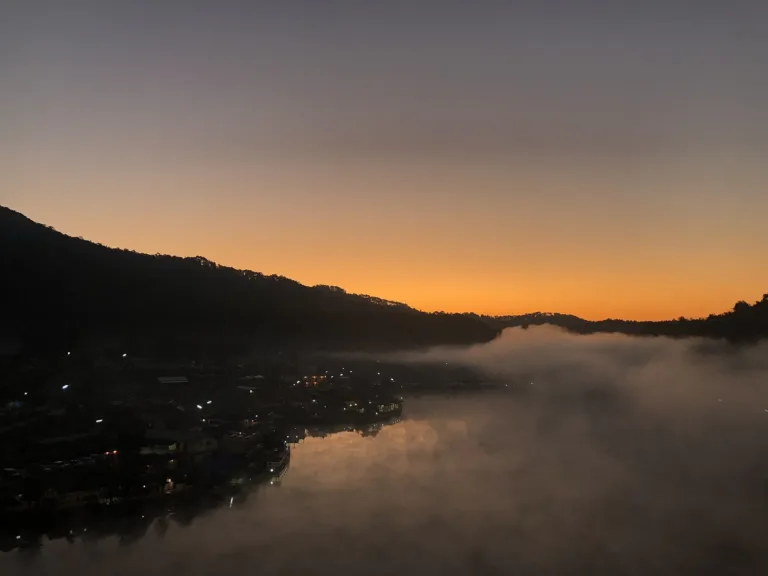 02
 03
 04
 05
Tap a day card to see that day’s weather, rain, haze and hourly forecast
Best time to go Best window 06:00–15:00 Little rain
Holiday — traffic on the way up and parking fills fast; leave early
Green band = hours used for the score
Best time to go Fine all day little rain through the day
Holiday — traffic on the way up and parking fills fast; leave early
Green band = hours used for the score
Best time to go Fine all day little rain through the day
Holiday — traffic on the way up and parking fills fast; leave early
Green band = hours used for the score
Best time to go Best window 06:00–16:00 Little rain · light drizzle possible at times
No warnings today — normal road and weather conditions
Green band = hours used for the score
Best time to go Best window 06:00–15:00 Little rain · light drizzle possible at times
No warnings today — normal road and weather conditions
Green band = hours used for the score
Best time to go Fine all day little rain through the day · light drizzle possible at times
No warnings today — normal road and weather conditions
Green band = hours used for the score
Best time to go Fine all day little rain through the day
No warnings today — normal road and weather conditions
Green band = hours used for the score
Scored from cloud cover at every level and tonight’s moonlight — the darker the sky, the clearer the Milky Way · tap another night below for the next 7 nights
Ban Rak Thai, locally "Ban Mae Aw", is a Yunnanese Chinese village in a valley on the Thai–Myanmar border, Moo 6, Mok Cham Pae subdistrict, Mueang Mae Hong Son, about 44 km from town. It was founded by former soldiers of the Kuomintang's 93rd Division and their families.
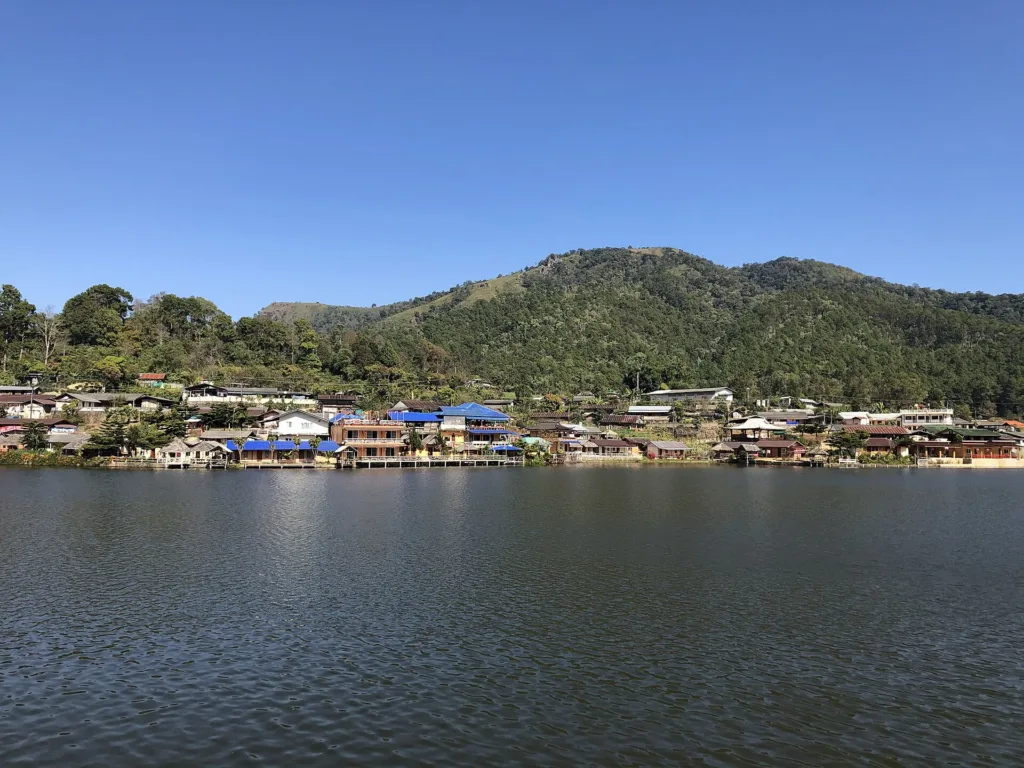
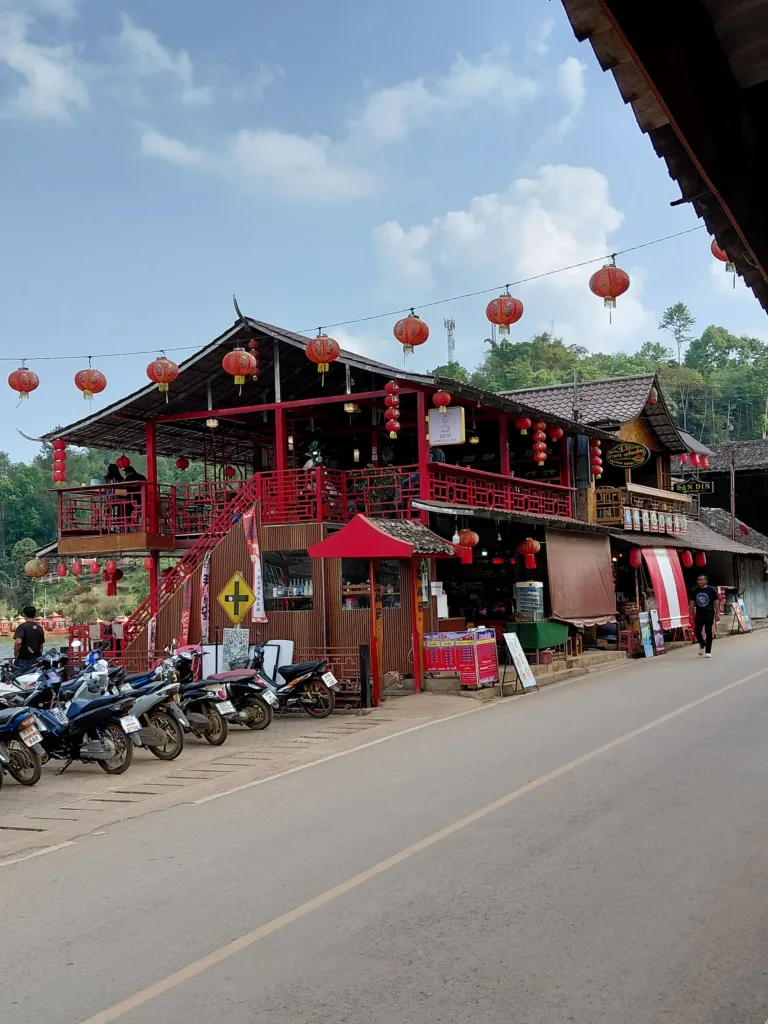
Its highlights are the reservoir at the heart of the village, nicknamed the "dam in the mist", Yunnan-style mud-brick houses, tea shops serving oolong from the hillside gardens, and Yunnanese food such as braised pork leg with steamed buns.
There is no entry fee. The tourist season runs roughly October–February, when it gets busy and rooms fill fast — book ahead.
Mist drifts over the reservoir almost year-round, especially on cool-season mornings and after a rainy night in the wet season — clearest around 6:00–8:00, before the sun breaks through. The best odds of mist on the water are from mid-January to mid-February.
Photos from Wikimedia Commons and contributors · full credits inClassic page
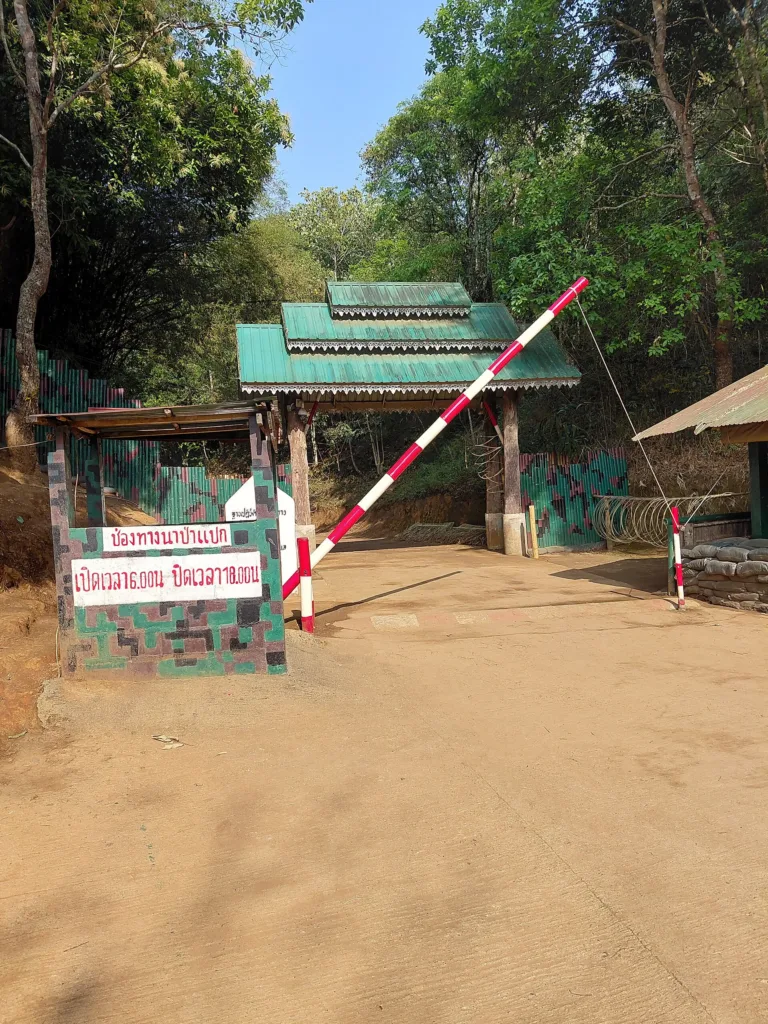
The village sits right on the Thai–Myanmar border — do not cross the line or enter military areas without permission, and carry ID or a passport
The final stretch is winding and steep, slippery in the rains with landslide risk — drive slowly in a low gear
Cool-season traffic is heavy and the village runs one-way traffic — follow signs and staff
Scammers pose as lodging pages — book through channels you can verify
Adults 0 THB · Time needed Half a day – 1 night
Weekends and long holidays in Nov – Jan; rooms are often booked weeks ahead
Ban Rak Thai season opening around 8 October (lanterns, fireworks, dragon boats) · Chinese New Year · Mid-Autumn Festival · Qingming
Tap a month on the wheel to see weather, rain, haze and crowds from 10 years of records
Best time · November–February is cool to cold with clear skies, and morning mist over the reservoir is at its best. Stay the night to catch it around 6:00–8:00.
Watch out · March–April brings very heavy forest-fire smoke to Mae Hong Son: hazy views and high dust. July–September is very wet, with a slippery mountain road and landslide risk.
Oct by the records 19–26°C · avg rain 155 mm (23 rainy days) · clear 6 days · avg PM2.5 6
Ban Rak Thai, Moo 6, Mok Cham Pae subdistrict, Mueang Mae Hong Son, lies in a valley on the Thai–Myanmar border facing Shan State, about 44–45 km northwest of town. Mountains ring it, with Doi Tong Mok (also called Doi Tong Mae Yot) in the Thanon Thong Chai range as the highest peak and the border line; to the north is Myanmar, to the south Ban Na Pa Paek, to the east Ban Huai Phueng and to the west Ban Ruam Thai. Many sources say the village stands at 1,776 m, but elevation models put the reservoir at about 1,140 m — the 1,776 m figure more likely refers to the surrounding peaks.
The original name is "Ban Mae Aw". It comes from the Chinese "mi-o", "mi" meaning rice and "o" a place to store it, while the Shan call the place "Thong Ye Khao", the field of rice barns, because upland rice was grown here and there was just enough flat land for granaries after harvest. When the Chinese settled, they called it "Ban Mae Aw Mai" (New Mae Aw), to pair with "Ban Mae Aw Luang" across the border in Myanmar.
Before the Chinese arrived, the land was cogon grass and mixed deciduous forest. Only four or five Hmong families farmed opium, maize and vegetables here alongside Shan villagers from the Myanmar side, at the foot of Doi Tong Mok. When the soil wore out and the state began suppressing opium, they moved to Ban Na Pa Paek and Ban Huai Makhuea Som, where they still live.
The village's story begins with the Chinese Civil War. When the Communists won in 1949, the Kuomintang's 93rd Division in Yunnan retreated into Burma. After Burma complained to the United Nations, an airlift to Taiwan began on 7 November 1953, taking 7,784 people, but thousands stayed. In 1960–61 military operations pushed the remaining forces into Thailand and Laos. General Li Wenhuan's Third Army based itself at Ban Tham Ngop in Fang (now Chai Prakan), Chiang Mai, and General Duan Xiwen's Fifth Army at Doi Mae Salong, Chiang Rai. On 6 October 1970 the Thai cabinet allowed both to remain as refugees, and in early 1972 they agreed to quit the opium trade and help the Thai army guard the border and fight the communists. Thai officials called them the "Chinese Nationalist Soldiers" (Thahan Chin Khana Chat).
Ban Rak Thai is one of several former Nationalist-soldier villages. The Ministry of Interior allocated land to these Chin Haw in three northern border provinces — Chiang Mai, Chiang Rai and Mae Hong Son. Mae Hong Son has three: Ban Rak Thai, Ban Suriya and Ban Santichon, while other large communities are in Fang, Thoeng and Doi Mae Salong. Taiwanese government figures quoted by foreign media in 2015 counted 64 Kuomintang villages still in northern Thailand.
Accounts of Mae Aw's founding differ. One says that in 1967 General Li sent General Kung Chao Long with 180 soldiers to a border post, a six-day trek on foot and horseback to Doi Tong Mae Yot, where they set up a command base; around then the site was a military camp with bunkers and a military jail, not yet a village. In 1973 two or three soldiers' families followed their husbands to settle — the first were Kow Yi Chai Yang Chen Ang and Long Xian Sae Lin. The Sirindhorn Anthropology Centre instead records that in 1976 Majors Lao Chu and Lao Yang, staff officers under General Li, led troops from Tham Ngop to grow opium at Ban Mae Aw Luang on the Myanmar side, before building bamboo-and-thatch homes on the Thai side. Another clue: the 2026 season opening was billed as "60 years of Ban Rak Thai", which counts back to around 1966 — suggesting the community dates its beginnings earlier than some documents do.
In the late 1970s the Mae Hong Son border was still contested by several armed groups. In 1977 the Thai government began suppressing opium along the border and pushed out the Shan forces of Khun Sa. Once the area was calmer, some Nationalist soldiers settled at Ban Mae Aw Mai, with Lao Chu and Lao Yang — then living at Ban Mai Nong Bua in Fang — arranging help with utilities from the Taiwanese government before moving their own families here.
The 1980s transformed the village. In 1980 a royal project at the Pang Tong palace, on the same road, began promoting tea, coffee, temperate crops and livestock in place of opium, and the Taiwanese government gave villagers quality tea stock — oolong became the main cash crop. In 1982, with the war against the Communist Party of Thailand over, the soldiers laid down their arms; the government allowed them to settle legally, allocated homes and farmland and gradually granted Thai citizenship to the veterans and their families. These troops had been used against the communists at Khao Kho in Phetchabun and to guard road building in Nan and Chiang Rai.
In 1986 the cabinet made Ban Mae Aw Mai an official village, separate from Ban Na Pa Paek, and renamed it "Ban Rak Thai" — "village that loves Thailand" — Moo 6 of Mok Cham Pae. The name reflects the community's bond with the country that sheltered it: many homes still hang red couplets in gold letters by the door alongside portraits of King Bhumibol, and some elders still count years by the Republic of China (Minguo) calendar, which starts in 1912.
The village sits on a small plain between hills. At its centre is a reservoir built with help from the Mae Hong Son Provincial Administrative Organisation and the Royal Thai Army to hold water year-round. About 30 percent of residents live by the water; the rest build outward and up the hillsides, linked by ring roads that meet in the middle. A raised communal granary stores paddy for the whole year, a hilltop plaza hosts rain-calling rites and post-harvest celebrations, and the village shrine to Guanyin stands to the south behind Ban Mae Aw Rak Thai School. The traditional houses are rural Yunnanese mud-and-straw buildings, studied by Silpakorn University researchers in 1997. Silpakorn University architect Orasiri Panin studied 23 sample houses in Mae Hong Son's Chin Haw villages, including Ban Rak Thai, and found most follow a standard three-room plan with mud-and-grass walls and grass roofs in the style of rural Yunnan — excellent natural insulation. Daily life happens mostly in the fields, so verandas and yards serve for rest, with granaries and animal pens sized to the family. On 22 September 2009 the Mae Hong Son governor also approved a village development plan requiring new buildings to fit Yunnanese culture.
Besides tea, villagers grow lychees, longans, peaches, pears, plums, apricots, garlic, cabbage, maize and rice. Representatives bargain with traders over lychee, longan and tea prices, and families make pickled greens, fermented tofu, pickled fruit and dried tea. Mules — "ma lo" in the village — are still seen, a reminder of the mule caravans that once carried 40–60 kg loads over the mountains. Most of the teaware on sale is imported from China and Taiwan.
In January 2023 the civil registry counted 1,436 residents (720 men, 716 women) in 585 households. Most are Yunnanese Chinese (Chin Haw), living alongside Shan, Hmong and northern Thai neighbours. Only about 100–200 families descend directly from the Kuomintang soldiers, as the first generation has almost all passed away. Villagers speak Yunnanese, northern Thai and Thai, are Buddhist or Christian, and keep Chinese New Year, Qingming and the Mid-Autumn Festival.
The village's history is kept in a small museum run by Uncle Jata Sae Khuang (Huang Jiada), who fled with his parents at the age of two and became a boy soldier in the 93rd Division at eleven. His hilltop war museum opened free to visitors around 1999, telling the story of the Nationalist soldiers and the old opium trade; he was inspired by the museum at Santikhiri (Doi Mae Salong) and later opened a tea shop to help fund it.
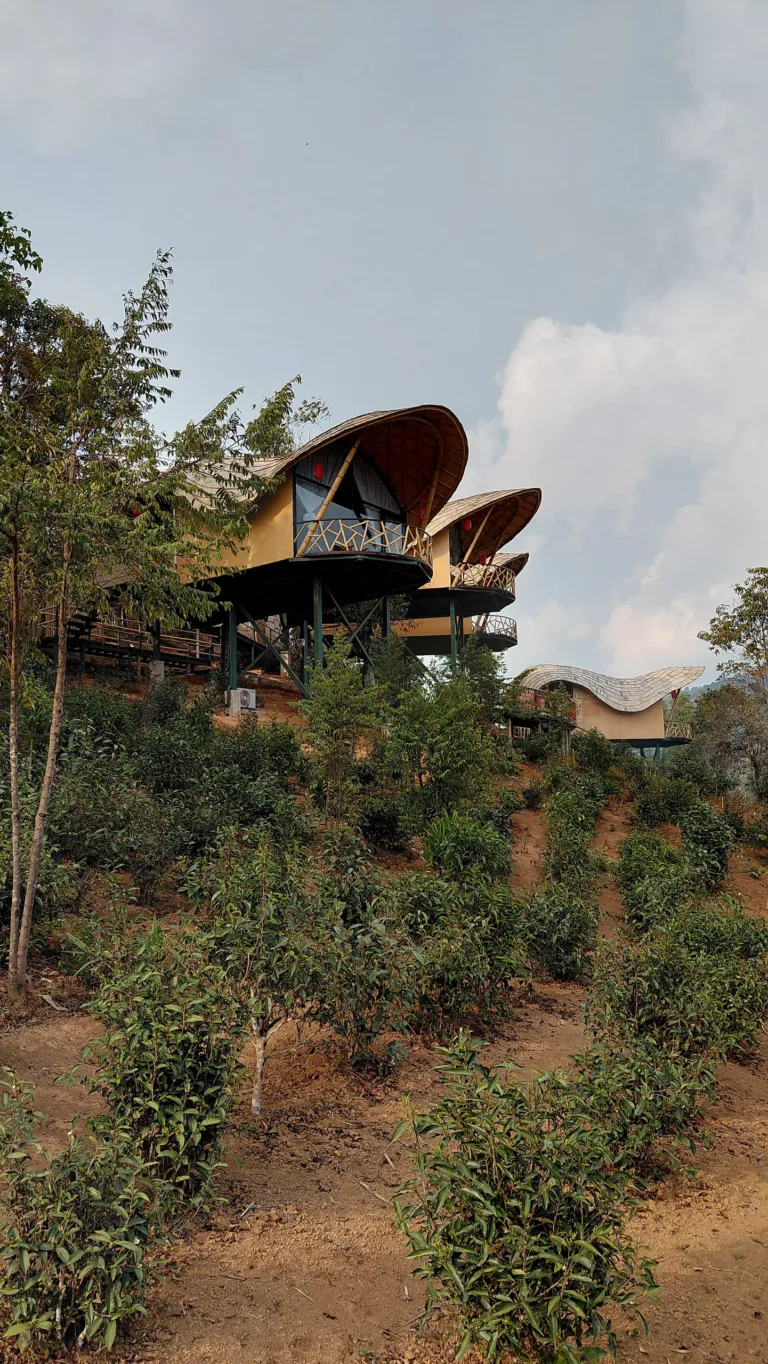
Tourism slowly reshaped this once-remote border village. A 2005 research project helped the community develop eco- and cultural tourism; lakeside homes became inn-style homestays, tea houses and Yunnan restaurants, and the reservoir became the "dam in the mist" landmark, with a landing for boat rides. The season runs roughly October–February. In late 2023 visitor numbers hit a record, more than 1,000 rooms were booked into early 2024 and the village committee and police introduced one-way traffic. On 8 October 2025 the Mae Hong Son governor opened the tourist season, and Forbes ranked Ban Rak Thai 34th among the world's 50 most beautiful villages — the only Thai village on the list. A 2019 Rangsit University study found development had lacked planning and continuity, and proposed a land-use plan with a tourist information centre, a community history museum and a local-knowledge centre. The season opening on 8 October 2026 marked "60 years of Ban Rak Thai" with a lantern display, fireworks over the reservoir, cultural shows and a dragon-boat performance.
Even so, tourism income is unevenly shared: community studies found most of it goes to a few families running lodgings and shops, while many households still depend on farming. Visitors can help by buying tea and souvenirs from village shops, eating at local restaurants, asking before photographing mud houses and people, and respecting the border just beyond.
Arrived? Check in, collect a stamp and tell others what it is like right now
Check your location first, so you do not fill in the form for nothing
Location must be on and within 1.5 km · One check-in per place per day · come back on other days to check in again
Post photos from anywhere — no need to be here · Up to 20 photos at a time · JPG / PNG / WebP · GPS location data is removed automatically
From Mae Hong Son town, drive north about 44 km following si…
North past Pha Suea and Pang Tong, about 44 km · Fuel
Fly to Mae Hong Son airport, then rent or hire a vehicle · As agreed
From Mae Hong Son town · As agreed
Paved throughout; the last stretch is rural road MS 4001, winding and steep. In high season the village runs one-way traffic
Park at lodgings, restaurants and the lots around the reservoir; spaces fill fast on cool-season holidays
Petrol stations in Mae Hong Son town — fill up before the climb
Mobile signal works in the village; near the border some phones may pick up Myanmar networks
It is a village, open all day; most shops open about 8:00–20:00
around 44 km fromMae Hong Son town
Ban Rak Thai, Mae Hong Son
0 THB
Approx. nightly price for 2 adults (next week) · final price depends on your dates
Best day this week: Monday 26 Oct · Check in when you arrive to collect a stamp